Guide · Diagnostic
How to choose dental mouth mirrors
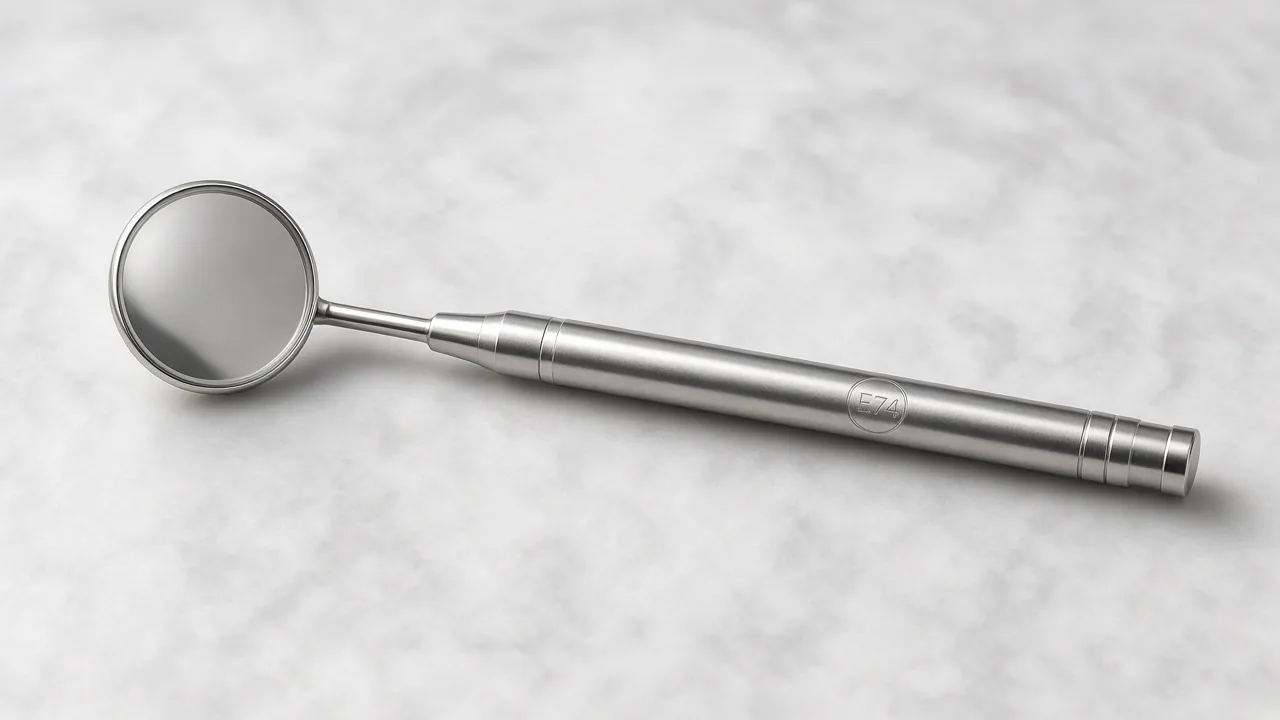
A mouth mirror is the most used instrument on the tray. This guide covers the choices that matter when you buy: mirror type, head size, handle style, and how to keep the glass clear.
General information, not medical or veterinary advice. Follow your local rules and the instructions that come with your equipment.
What a mouth mirror does
A mouth mirror does three jobs at once. It lets the clinician see surfaces that cannot be viewed directly, it retracts the cheek or tongue, and it reflects light onto the tooth. Because it is used in almost every examination, small differences in glass quality, head size and handle balance add up over a day of patients.
Front-surface or standard mirrors
The biggest difference is where the reflective coating sits.
- Standard (back-surface) mirrors have the coating behind a layer of glass. Light reflects off the coating and also off the front of the glass, so you can see a faint second image, often called a ghost or double image.
- Front-surface mirrors have the coating on the front of the glass, so there is only one reflection. The image is sharper and brighter, which helps when judging margins or small defects.
The trade-off is that a front-surface coating is exposed, so it scratches more easily than glass. Handle these mirrors gently, clean them with soft materials, and replace the head when the surface is scratched or cloudy. Our Mouth Mirror No. 5 uses a front-surface head.
Head size: which number to buy
Mirror heads are sold by number. A larger head shows more of the field and reflects more light. A smaller head fits more easily in a narrow mouth or behind the last molar. Sizes differ slightly between makers, but a No. 4 is roughly 20 mm across and a No. 5 roughly 22 mm.
| Choice | Good for | Keep in mind |
|---|---|---|
| Smaller heads (for example No. 2) | Children, tight spaces, limited opening | Smaller field of view |
| No. 4 | General examination, a bit more control in tight areas | Slightly less light than a No. 5 |
| No. 5 | General examination, the widest common view | Can feel large in small mouths |
Most general practices stock mainly No. 4 or No. 5 heads and keep a few smaller ones for patients who need them.
Cone-socket heads and handles
Many mirrors are made in two parts: a mirror head that screws into a handle through a standard cone-socket thread. This is useful because the head wears out faster than the handle. When the glass is scratched you replace the head and keep the handle.
- Heads and handles from different makers often fit each other on the standard thread, but test a sample before ordering in volume.
- Buy spare heads in larger quantities than handles.
- Check that the head sits firmly with no wobble once it is tightened.
Handle style
Handles are made in plain, hollow and textured styles. Hollow handles are lighter, which some clinicians prefer for long sessions. Solid handles are heavier, and some people find them better balanced. A textured grip helps when gloves are wet. If you buy hollow handles, make sure they are sealed at both ends so nothing collects inside during cleaning.
A short buying checklist
- Front-surface or standard glass.
- Head size or sizes you need.
- Cone-socket thread and whether you want heads and handles sold separately.
- Stainless steel handle that can go through your steam autoclave.
- Quantity: wholesale pricing starts at twelve units of one item. See the wholesale list.
- Supply condition. Instruments are supplied non-sterile and must be cleaned and sterilized before first use.
Keeping mirrors clear
Clean mirrors soon after use so debris does not dry on the glass. Use a soft brush and a neutral instrument detergent, not abrasive pads or powders, which scratch the surface. Rinse, dry by hand with a lint-free cloth, and store the mirror so the glass does not rub against other instruments. Check each head under good light. Cloudiness, scratches or a lifting edge mean it is time to replace it. Steam sterilization is normal for stainless steel handles. For the mirror head itself, always follow the instructions that come with it. Our care guide has a full checklist, and the reprocessing guide covers cycle settings.
Buying for a clinic, school or store
If you are equipping a group practice, a student programme or a shop, buy mirrors with the rest of the examination set. The 5-pc Exam Kit includes a mouth mirror, explorer, probe, cotton pliers and an excavator. For larger orders, use the wholesale quote form and we reply with a written quote before anything is charged.
Related products
Questions
What does front-surface mirror mean?
The reflective coating is on the front of the glass instead of behind it. That removes the faint double image of a standard mirror and gives a sharper reflection, but the coating can scratch if it is handled roughly.
Which mouth mirror size is most common?
Most general practices use a No. 4 or a No. 5 head. The No. 5 is slightly larger and gives the widest common field of view.
How often should mirror heads be replaced?
There is no fixed interval. Replace a head when it is scratched, cloudy or loose. Heads wear out faster than handles, so keep spares.
Can mouth mirrors be autoclaved?
Stainless steel handles can be steam sterilized. For the mirror head, follow the instructions for that specific head, because coatings and mounting differ between makers.
Are E74 mouth mirrors supplied sterile?
No. Every E74 instrument is supplied non-sterile. Clean and steam sterilize it before first use.