Guide · Care
How to clean and care for stainless steel instruments
Stainless steel instruments last for years when they are cleaned, dried and stored the same way every time. This checklist turns that routine into steps, and explains what the spots and stains on a tray usually mean.
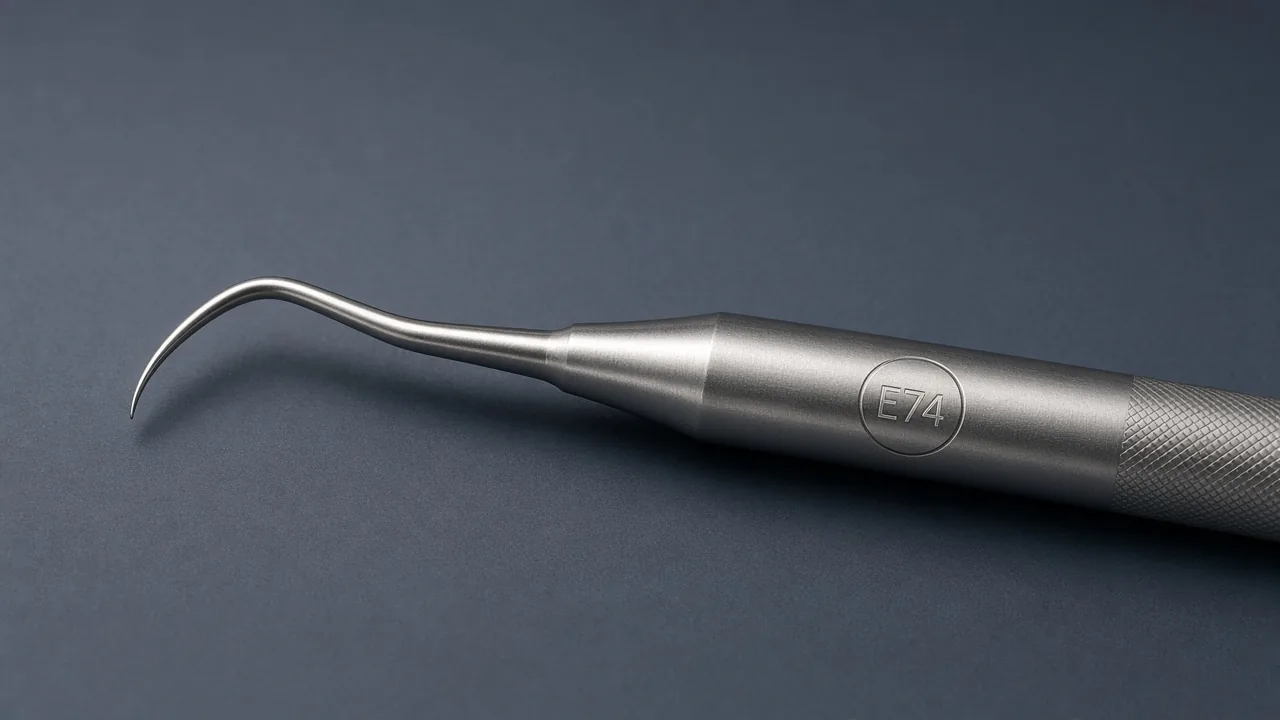
General information, not medical or veterinary advice. Follow your local rules and the instructions that come with your equipment.
Why care matters
Stainless steel resists rust because a very thin layer of chromium oxide forms on the surface. Blood, saline, chlorides, hard water and scratching can damage that layer. Good care protects it. This guide gives general advice. Always follow your local infection-control rules and the instructions for your autoclave and detergents.
Step by step
- At the point of use. Wipe off gross debris and keep instruments moist so blood does not dry on. Do not leave them in saline.
- Open hinged instruments. Scissors, forceps and pliers should be opened so every surface is reached.
- Clean. Use an ultrasonic bath or washer-disinfector with a neutral or mildly alkaline instrument detergent. For hand cleaning use a soft brush, never steel wool or abrasive pads.
- Rinse. Use softened, deionised or distilled water where you can. Hard water leaves white spots.
- Dry fully. Dry with a clean lint-free cloth or in a drying cycle. Moisture left on the steel causes most spotting.
- Inspect. Look at tips, edges, joints and surfaces under good light. Remove anything cracked, pitted or misaligned from use.
- Lubricate. Put a drop of steam-permeable instrument lubricant on hinges and ratchets, and work it in.
- Pack. Use pouches or cassettes, with hinged instruments unlocked and loosely open.
- Sterilize. Steam sterilize. Cycles in common use are 134 °C for at least 3 minutes or 121 °C for at least 15 minutes. Follow the validated cycle for your autoclave.
- Dry and store. Allow the full drying phase, then store in a clean, dry place away from chemicals.
What to avoid
- Bleach and chloride-heavy cleaners. Chlorides cause pitting in stainless steel.
- Long soaks in saline or disinfectant. Soaking overnight is a common cause of spotting.
- Abrasive pads and powders. Scratches give rust a place to start.
- Mixing with other metals. Carbon steel or plated instruments in the same load can leave rust marks on clean ones.
- Overloading baths and trays. Instruments that touch each other do not get clean and can scratch.
- Dropping and levering. Tips and edges fail when they are used as screwdrivers or pry bars.
Reading stains and spots
| You see | Likely cause | What to do |
|---|---|---|
| White or rainbow spots | Minerals in rinse or steam water | Use softened or distilled water for the final rinse |
| Orange-brown spots | Residue left before sterilizing, wet storage, or rust transferred from another instrument | Clean again, dry fully, and remove the source of rust |
| Pitting | Chlorides, usually from dried blood or saline | Take the instrument out of service if the pits are deep |
| Black or dark stains | Detergent residue or unsuitable chemicals | Rinse thoroughly and check your detergent |
Light surface spots can often be removed with a cleaner made for surgical stainless steel, used exactly as the label says. Instruments that are cracked, deeply pitted or misaligned should be retired.
Sharp instruments
Scalers, curettes, periotomes and scissors need an edge that matches the original angle. Do not sharpen them freehand on a rough stone. E74 resharpens scalers, curettes and periotomes free for as long as you own them, which is described on the warranty page.
Animal-care tools
Hoof tools, grooming scissors, combs and tick removers are exposed to dirt, moisture and manure, so they need the same routine in simpler form. Brush off debris, wash, dry fully, wipe with a light coat of oil on cutting edges, and store dry. Clean and disinfect tools between animals, especially after treating a foot or skin problem. See the veterinary range.
A simple routine to keep
- After every use: rinse, clean, dry, inspect, then sterilize or disinfect as appropriate.
- Weekly: look over hinges, ratchets and tips under good light, and re-lubricate joints that feel stiff.
- Monthly: check autoclave rinse water for minerals, and sort out any instrument that shows repeated spotting.
- When something stains: find the cause before replacing the instrument, because the same cause will mark the next one.
More detail
The cleaning and steam sterilization guide covers the reprocessing sequence in the form clinics use. The steel guide explains why stainless steel stains in the first place.
Related products
Questions
How do I stop rust spots on stainless instruments?
Dry them fully after cleaning, avoid saline and chlorides, keep carbon steel instruments out of the same load, and use softened or distilled water for the final rinse.
What temperature and time should I use in an autoclave?
Cycles in common use are 134 °C for at least 3 minutes or 121 °C for at least 15 minutes. Use the validated cycle for your autoclave and follow its instructions.
Can I use bleach on stainless steel instruments?
It is best not to. Bleach and other chloride-heavy products cause pitting in stainless steel. Use detergents and disinfectants made for surgical instruments.
Why do instruments get white spots after sterilizing?
White or rainbow spots usually come from minerals in the rinse water or steam. A final rinse in softened or distilled water helps.
Are E74 instruments sterile when they arrive?
No. They are supplied non-sterile. Clean, inspect and steam sterilize every new instrument before first use.