Guide · Materials
German vs Japanese stainless steel instruments
Buyers often ask whether German or Japanese steel is better. The honest answer is that the country on the label does not tell you the grade, the heat treatment or the finish. Here is what to look at instead.
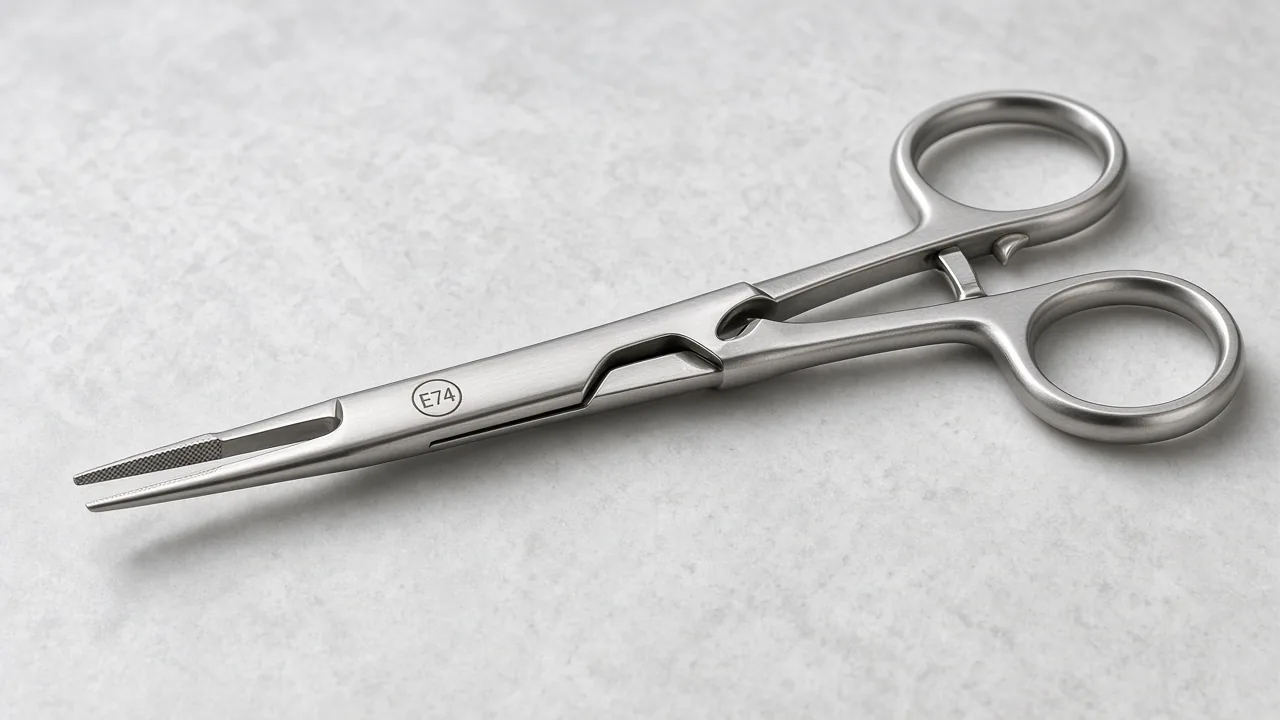
General information, not medical or veterinary advice. Follow your local rules and the instructions that come with your equipment.
What "German stainless" usually means
In instrument catalogues, "German stainless" most often means one of two things: the instrument was made in Germany, or it was made from a steel with a European designation. Steels in the European system have numbers such as 1.4021, 1.4028 and 1.4034. Those belong to the same martensitic family as the American AISI 420 grades, with chromium of about 12 to 14 percent and different carbon levels. They are not secret recipes. They are published grades that any mill can supply.
What "Japanese stainless" usually means
"Japanese steel" is most common in scissors, shears and knives. The names you meet are grades such as 440C, VG-10 and ATS-34. These are high-carbon steels with more chromium than the common instrument grades. After hardening they can be very hard and hold an edge for a long time. That is why they are popular for hair shears and cutting tools. Japanese mills also make the same standard instrument grades used everywhere else, so "Japanese" on a hand instrument does not automatically mean one of these high-end steels.
Steel family comparison
| Type | Typical chromium | Typical carbon | Where it is used |
|---|---|---|---|
| AISI 410 type | 11.5 to 13.5% | up to 0.15% | Tougher parts: handles, pliers, retractors |
| AISI 420 type | 12 to 14% | 0.15% and above | Harder parts: edges, beaks, tips |
| 440C type | 16 to 18% | 0.95 to 1.20% | Shears, knives and other edge-critical tools |
More carbon lets the steel reach a higher hardness, so an edge lasts longer between sharpenings. The cost is toughness. Very hard steel can chip or snap if it is dropped or levered. Lower carbon steel is tougher and bends before it breaks. Neither is better in every case. The right choice depends on the job.
What decides how an instrument performs
- The grade. Chromium and carbon set the limits for hardness and corrosion resistance.
- Heat treatment. The steel is heated, cooled quickly and then tempered. Poor heat treatment wastes a good grade.
- Finish and passivation. A well-finished, passivated surface resists staining better than a rough one.
- Design and machining. Aligned tips, smooth joints and consistent edges matter as much as the steel.
- Care. Drying, correct detergents and avoiding chlorides keep any stainless steel in good shape.
Questions to ask any supplier
- Which grade is the steel, and under which standard?
- Is the hardness checked after heat treatment, and can you see the figure?
- Is the instrument passivated?
- Can you see a mill certificate for the steel bar or sheet?
- What certifications does the maker hold, and are the certificate numbers published?
- What happens if a joint fails or corrodes?
A supplier who answers these clearly is more useful than one who only names a country.
How E74 answers
E74 instruments use premium surgical-grade stainless steel in AISI 410 and 420. Harder 420 is used where an edge or a beak needs to hold its shape, and tougher 410 where a part has to flex. Mill or material certificates from our steel supplier are available on request with a quote or order. We are not yet certified to any medical device quality standard, and the quality page says so plainly and shows what we do check. Lifetime cover against manufacturing defects and free resharpening of scalers, curettes and periotomes are set out on the warranty page.
Common mistakes when comparing
- Comparing prices without a grade. "Surgical stainless" is a phrase, not a grade, unless the grade is named next to it.
- Assuming harder is always better. A very hard edge on a part that gets levered or dropped will chip.
- Judging by shine. A bright polish looks good in a photo but says nothing about the steel or the heat treatment.
- Ignoring the joint. Box joints, screws and ratchets fail long before a good blade does, so test the action as well as the edge.
Where to read more
Our stainless steel guide explains hardening and passivation in more detail. The care guide shows how to keep any of these steels from staining.
Related products
Questions
Is German stainless steel better than Japanese?
Neither label guarantees quality. German usually refers to where the instrument was made or to a European steel designation. Japanese usually refers to high-carbon grades used for cutting tools. Compare the grade, heat treatment and finish instead.
What is the difference between 410 and 420 stainless?
Both are martensitic stainless steels. 420 has more carbon, so it hardens further and holds an edge. 410 has less carbon and is tougher, which suits parts that flex.
What is 440C stainless steel?
A high-carbon, high-chromium stainless steel that reaches very high hardness. It is used for shears, knives and bearings.
Does steel grade affect rust?
Chromium is what makes steel stainless, so higher chromium helps. Finish, passivation and care matter just as much. Any stainless steel can stain if it is left wet or exposed to chlorides.
Can I get a mill certificate for E74 instruments?
Yes. Mill or material certificates from our steel supplier are available on request with your quote or order.